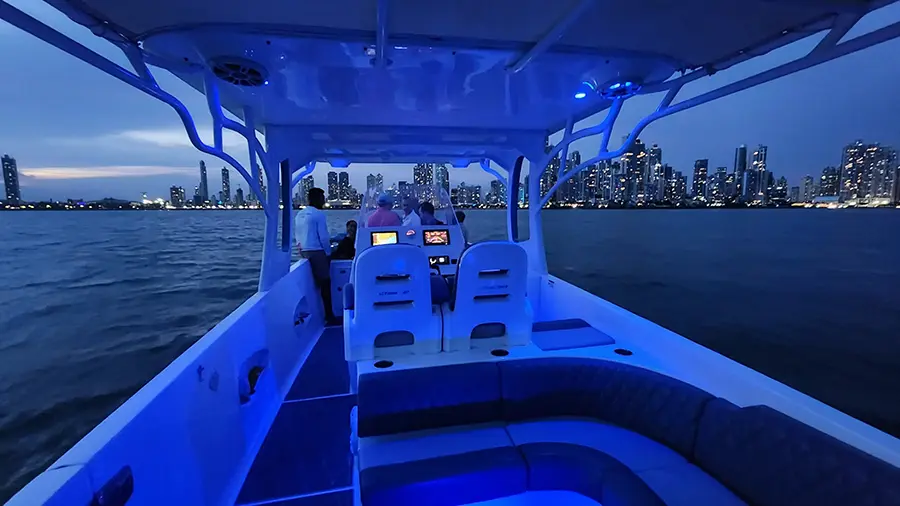

The Panama Canal is famous worldwide, but if you don't live in Panama, you may have questions about how to visit it and what you could expect on these tours.
The Panama Canal is famous worldwide, but if you don't live in Panama, you may have questions about how to visit it and what you could expect on these tours.
Where is the Panama Canal?
The Panama Canal is located in Panama City, specifically at the narrowest point of the Isthmus. It was inaugurated on August 15, 1914, and connects the Caribbean Sea with the Pacific Ocean.
How long is the Panama Canal?
It is approximately 82 kilometers long.
How long does it take to go through the Panama Canal?
Tours that go through the Canal can vary in length, from a full transit of approximately 8 hours to a partial transit of approximately 5 hours. If you want to get close to the Canal but not necessarily go through it, you can take a 2- or 4-hour Bay Tour or a Gatun Lake Fishing Tour, which usually takes around 6 hours.
Is the Panama Canal for tourists?
The Panama Canal is one of the country's top tourist attractions and offers a variety of experiences. Visitors can enjoy boat tours through the canal or sailing around it, observing the workings of the locks and the impressive engineering behind this monumental work.
The Miraflores Locks are especially popular, as they feature a visitor center with a museum and viewing points for watching ships transit from land.
Is the Panama Canal appropriate for children?
Yes, the Panama Canal is an exciting and educational place for children. Although it is not often considered an entertainment site, children can enjoy a yacht ride while learning about its history and operation. Depending on your tour type, they can also fish around the Canal.
Where to go to visit the Panama Canal?
Panama Gem Charters offers private yacht tours customizable to your liking. It is also worth mentioning that if you are not interested in sailing, you can visit the Miraflores Visitor Center, one of the most popular places to observe the canal's operation. The center has a terrace and stands for viewing, as well as an IMAX theater that shows a film about the canal's history. Entrance costs approximately $15 for adults and $10 for children.
What time do ships pass through the Canal?
Ships pass through the Panama Canal throughout the day, but there are times when you are more likely to see them. Generally, the recommended times are:
- In the morning (until 7:30 a.m.) or in the afternoon (from 1:35 p.m. onwards).
- Not many ships usually pass between 11:00 a.m. and 3:00 p.m., when traffic direction changes.
Why is it essential to visit the Panama Canal?
The canal allows ships to significantly shorten their route, avoiding the long and dangerous journey around South America. Its strategic location has been essential for international maritime trade. Visiting the Panama Canal is an incredible experience for several reasons:
- Impressive Engineering: Its construction required finding creative solutions and overcoming many problems, such as disease and challenging terrain.
- Global Impact: The canal is vital for international trade because it facilitates the passage of ships between the two oceans.
- Spectacular Views: It is exciting to see the huge ships go up and down the locks. The canal's biodiversity will also surprise you.
- Cultural Significance: The Panama Canal is an important symbol for the country, representing pride and identity for Panamanians.
How does the Panama Canal work? (video)
Watch our explanatory video about how the Panama Canal works:
How many ships pass through the Panama Canal per day?
On average, between 32 and 36 ships pass through the Panama Canal daily. However, due to weather and water conditions, this number may vary. The canal can handle up to 22 boats through the older locks (Panamax) and up to 9 ships through the new locks (NeoPanamax) in a single day.
Is the Panama Canal considered a wonder of the world?
Many consider the Panama Canal a wonder of the world. Since its inauguration in 1914, it has been recognized as one of the great engineering works of the 20th century. The canal's construction was a monumental effort that transformed global maritime trade by connecting the Atlantic to the Pacific Ocean, significantly shortening shipping routes.
Is the Panama Canal running out of water?
The Panama Canal has been affected by a combination of climatic and water resource management factors. In recent years, the area has experienced severe drought, leading to a significant reduction in water levels in Gatun Lake, which is crucial to the operation of the canal's locks.
Causes of water shortage
- Prolonged Drought: Lack of rainfall has been a constant problem, mainly since 2019, when precipitation was recorded well below the historical average, affecting the artificial lakes that feed the Canal basin.
- Rising Temperatures: Temperatures in the region have increased, increasing water evaporation in the lake.
- Water Consumption: Water use by nearby populations has also contributed to the decrease in available water levels.
The Panama Canal Authority has had to implement measures to manage this crisis, such as establishing fees for water use and limiting the number of ships that can transit. In short, the Panama Canal is not only a vital piece of infrastructure but also a symbol of human capacity to overcome challenges and connect the world.
Ready to set sail?
Book your private yacht with Panama Gem Charters and live your own story at sea.